
Shared Experiences Across Distance
Online multiplayer games let friends and family play together even when they live in different cities or countries. Jumping into the same lobby, tackling a raid, or queuing for ranked matches turns gaming into a shared ritual that replaces traditional hangouts. Voice chat, party systems, and cross‑platform play make it easy to stay close to people you care about, even when life gets busy.
Building Communities and Belonging
From Discord servers to in‑game clans and guilds, games give players ready‑made communities that share the same interests and goals. Whether it is a casual group that plays a few matches after work or a competitive esports team, these communities create a sense of belonging and identity. Players celebrate wins, support each other through losses, and often carry those friendships beyond gaming into real life.
Bridging Cultures and Generations
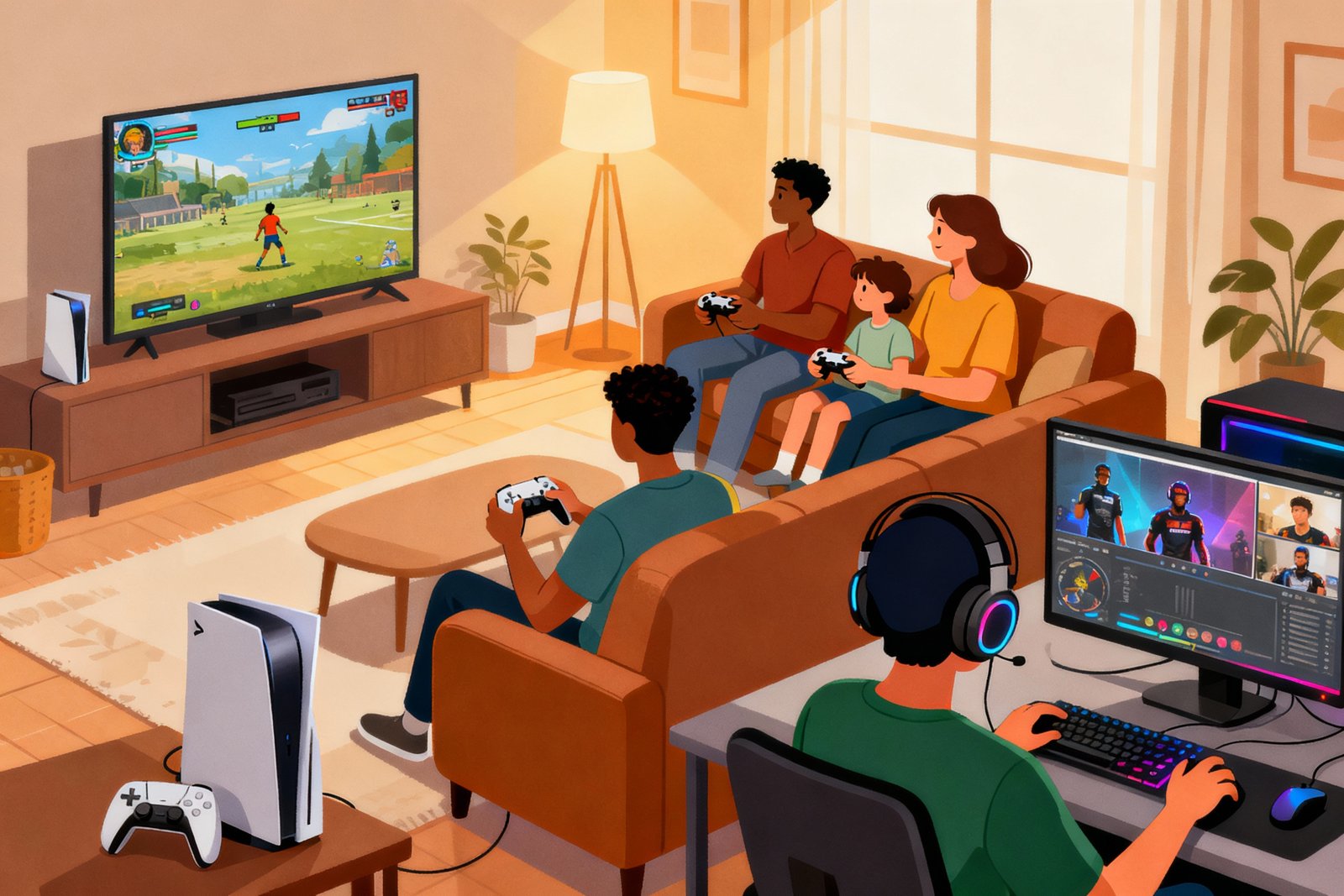
Games break down language barriers and cultural differences by giving players a common objective and shared rules. Teamwork becomes the universal language, helping people learn to cooperate with strangers from around the world. At the same time, simple co‑op games and party titles make it easy for parents, kids, and even grandparents to play together, turning gaming into a family activity instead of a solo hobby.
Improving Communication and Teamwork Skills
Modern games often require strategy, coordination, and clear communication to win. Players learn how to give quick instructions, share information, and adapt to changing situations together. Over time, this builds real teamwork skills that carry over to school, work, and other group activities. For many shy or introverted people, games also provide a low‑pressure way to practice social interaction and build confidence.
- https://www.bbc.com/worklife/article/20201215-how-online-gaming-has-become-a-social-lifeline
- https://www.internetmatters.org/resources/play-together-play-smart-gaming-research-infographic/