
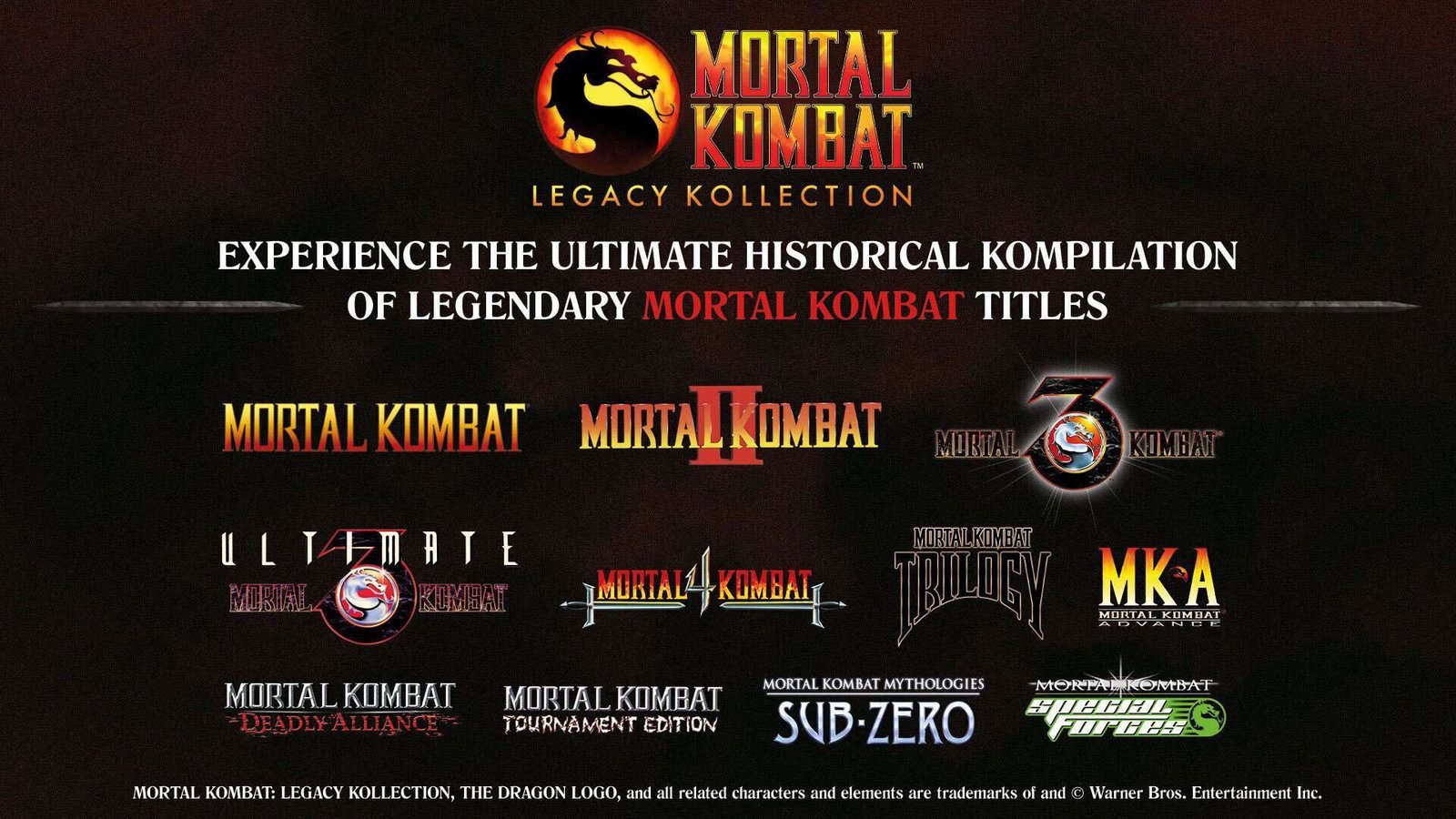
The Mortal Kombat Legacy Kollection is a comprehensive collection of Mortal Kombat’s rich history, including a mix of classic titles and some of the best-loved versions of the game. As the name suggests, this Kollection serves as a celebration of the franchise’s legacy, offering both nostalgia for long-time fans and an accessible entry point for newcomers. Here’s a breakdown of what makes it stand out:
Content Overview
The Kollection typically includes:
- Mortal Kombat (1992) – The original that started it all. This is where the series’ iconic characters, gruesome fatalities, and over-the-top violence made their debut. It retains the 2D gameplay mechanics, with pixelated sprites and a relatively limited roster compared to modern iterations, but the nostalgia factor is real.
- Mortal Kombat 2 (1993) – One of the most beloved entries in the franchise, MK2 introduced many iconic characters like Sub-Zero, Scorpion, and Liu Kang. The gameplay refined the original formula with more moves, better character balance, and deeper mechanics.
- Mortal Kombat 3 (1995) – MK3 was a turning point in the series. The game introduced the “run” mechanic, which sped up gameplay, and expanded the roster. It was polarizing for some but has earned a strong fan base. The Ultimate Mortal Kombat 3 version, often included in collections, added more characters and rebalanced the game.
- Mortal Kombat: Deadly Alliance (2002) – This entry marked the franchise’s shift to 3D, and while it didn’t win over every fan, it was an important step forward in terms of gameplay and story. It has a more in-depth fighting system, with characters having two distinct fighting styles each, making it an interesting departure from the 2D roots.
- Mortal Kombat: Deception (2004) – Deception refined many of the mechanics introduced in Deadly Alliance and introduced new features like the “Krypt,” an in-game store where you could unlock new content, and “Test Your Luck” minigames. It also introduced a more narrative-driven approach, pushing the story forward in interesting ways.
- Mortal Kombat: Armageddon (2006) – The final chapter in the 3D era, Armageddon combined elements from all previous games and delivered a large roster of fighters. It was somewhat of a fan service game but suffered from some gameplay balance issues and a less refined fighting engine compared to its predecessors.
Gameplay & Features
The core of the Legacy Kollection experience is, of course, the fighting itself. Mortal Kombat has always been known for its unique blend of brutal combat, strategic depth, and the ability to perform finishers that make it stand out from other fighting games.
- 2D vs. 3D: The inclusion of the early 2D games alongside the 3D era titles gives fans the full range of Mortal Kombat’s evolution. The transition from 2D to 3D was somewhat divisive, but the Kollection allows you to compare the shift in gameplay mechanics and design.
- Fatalities & Brutalities: These signature moves are the main draw of Mortal Kombat, and the Kollection doesn’t disappoint. Whether it’s the classic “Babality” or the newer “X-Ray” fatalities, the games are still full of inventive ways to finish your opponent.
- Challenge Towers & Mini-Games: Some of the later entries (especially Deception and Armageddon) offer bonus content such as the Krypt, Test Your Luck, and other challenge modes that add extra layers of replayability and fun.
- Multiplayer: While the Mortal Kombat Legacy Kollection offers local multiplayer, online modes may be limited or outdated, depending on the platform. The experience is best when played with friends in the same room, as that’s where Mortal Kombat’s frantic, fast-paced nature shines the most.
Graphics & Audio
The older 2D games have a certain charm, with their pixel art and digitized characters that evoke memories of arcades in the ’90s. When compared to the later 3D titles, these earlier games look a bit rough, but the core gameplay still holds up well.
For the 3D-era titles like Deadly Alliance, Deception, and Armageddon, the graphics are obviously dated by modern standards but were groundbreaking in their time. These games offer a more cinematic presentation, with detailed character models and full 3D arenas that gave the series a fresh new feel. The sound design, especially the iconic sound effects and music, remains as memorable as ever.
Story Mode and Cinematics
While the story in the earlier 2D games was minimalistic (mostly just a backdrop for the fighting), later entries in the collection, especially Deadly Alliance, Deception, and Armageddon, feature more in-depth narratives. These titles began incorporating full voice acting, cinematic cutscenes, and character arcs, pushing the Mortal Kombat lore forward.
However, if you’re looking for high production values like in modern fighting games, don’t expect the same level of cinematic storytelling as you’d find in Mortal Kombat 11. The story modes from the 3D games are more of a product of their time, with some cheesy dialogue and awkward pacing, but they provide a bit of extra depth.
The Legacy Factor
What truly sets the Mortal Kombat Legacy Kollection apart is its ability to transport you back to the origins of the series while showing how it evolved. The Mortal Kombat franchise has come a long way, and this collection captures that journey.
If you’re a long-time fan of the series, this collection is a fantastic trip down memory lane. For new players, it offers a great way to see how the series progressed, although it might feel a bit dated if you’re used to the high-quality polish of modern fighting games.
Final Thoughts
The Mortal Kombat Legacy Kollection is a solid tribute to the iconic franchise. The collection is packed with hours of classic content, and while some of the 3D-era titles may not hold up as well in comparison to modern fighting games, there’s still a lot of enjoyment to be had. The inclusion of both the 2D and 3D games is a huge plus, as it allows you to witness the evolution of Mortal Kombat first-hand.
It’s a must-have for diehard fans who want to experience Mortal Kombat’s history, but casual players or newcomers may find the older titles a bit clunky or frustrating. Still, for the price, it’s a great way to relive the glory of one of gaming’s most iconic franchises.
Rating: 8/10
Pros:
- Rich collection of Mortal Kombat’s history
- Diverse gameplay styles from 2D to 3D
- Classic characters and fatalities
- Plenty of extra content, such as minigames and unlockables
Cons:
- Dated graphics and gameplay mechanics in the 3D titles
- No modern online features
- Story mode is hit or miss, especially in the earlier titles