
Here’s a fairly up-to-date review / breakdown of Dispatch — what it does really well, where it stumbles, and who it’s best (or not) for.
✅ What Dispatch does well
- Strong writing, characters, and voice acting. The writing is widely praised as sharp, witty, and emotionally engaging — reviewers often call it some of the best writing in a “choice-driven” game in years.
The cast — including a major performance by the main character — brings those characters to life in a way that many players say feels more like a quality animated series than a game. - Unique premise & tone: superhero workplace comedy. Instead of playing as a “traditional superhero,” you play as someone behind the scenes — assigning (reformed) super-heroes to emergencies, dealing with office politics, and managing relationships. This twist on the superhero genre feels fresh.
- Blend of narrative and light strategy / management. Dispatch adds a modest gameplay layer atop the storytelling — you dispatch heroes, manage cooldowns, fatigue, character strengths, etc. For many players, these strategic elements add enough depth to break away from the “just a visual novel” feel.
- Ambience: presentation, art, animation, polish. The art style / animation direction is often singled out for being “polished” and cinematic — some reviewers say that if Dispatch were a TV show, it’d be getting a lot more buzz.
- Emotional payoff, character development, and replay value. Because characters are distinct and memorable, relationships and choices carry emotional weight. Many players appreciate how their decisions (in dispatching, conversations, team-building) influence character arcs and story — and some say this makes subsequent playthroughs rewarding.
In short: if you enjoy narrative-heavy games with strong writing, character focus, and the occasional bit of strategic management, Dispatch delivers — and then some.
⚠️ Where Dispatch falls short (or might disappoint some players)
- Limited direct interactivity — more “interactive movie” than “game.” Many critics and players note that outside of dispatching and occasional quick-time events (QTEs), you spend most of your time watching cutscenes and making dialogue/choice decisions. If you’re expecting action, open world, or traditional gameplay, it may feel underwhelming.
- Choices & consequences feel lighter than some expect. While choices exist and shape relationships/story threads, some reviewers argue the narrative consequences don’t always feel significant, especially compared to classic choice-driven games.
- Episode length & pacing issues. The episodic format — with relatively short episodes — has drawn criticism: some say certain episodes feel more like padding, or that subplots take too much time. Others note a sense of uneven pacing.
- Gameplay depth and variation are limited. The dispatch-management minigame and other interactive elements add variety, but overall the “gameplay mechanics repertoire” remains narrow — once you finish the story there’s not a lot of gameplay beyond replays.
- Might feel more like watching a show than playing a game — not for everyone. Some reviewers/users express frustration that by playing you’re mostly watching a story unfold, with only occasional choices. If you want “full-on” games (action, exploration, deep mechanics), Dispatch likely won’t satisfy that itch.
🎯 Who Dispatch is best for — and who might want to skip it
You’ll probably enjoy Dispatch if you:
- Love strong storytelling, character-driven narratives, and moral / emotional dilemmas.
- Enjoy games that play more like interactive series or graphic novels than action titles.
- Appreciate a bit of strategy / management (assigning heroes, managing cooldowns/fatigue, balancing team composition), even if it’s lightweight.
- Want a relatively short, contained experience (8 episodes, no endless grind).
It might disappoint you if you:
- Prefer games with active gameplay — action, exploration, freedom, deep mechanics.
- Expect player choices to radically shift plot or gameplay — some decisions feel more “flavorful” than “game-changing.”
- Dislike episodic formats or shorter titles (if you want long RPG-style games).
📝 My Take — Verdict
Dispatch succeeds as a superhero-themed interactive drama more than as a traditional “video game.” It doesn’t reinvent gameplay — but it doesn’t need to. What makes it special is its characters, voice acting, humor, and emotional storytelling. For players open to a story-heavy, choice-driven experience with occasional strategy, it’s among the best of 2025 so far.
If that sounds like your jam, I’d say Definite yes — worth playing. If you need gameplay mechanics, action, or deep interactivity, you might want to temper expectations.
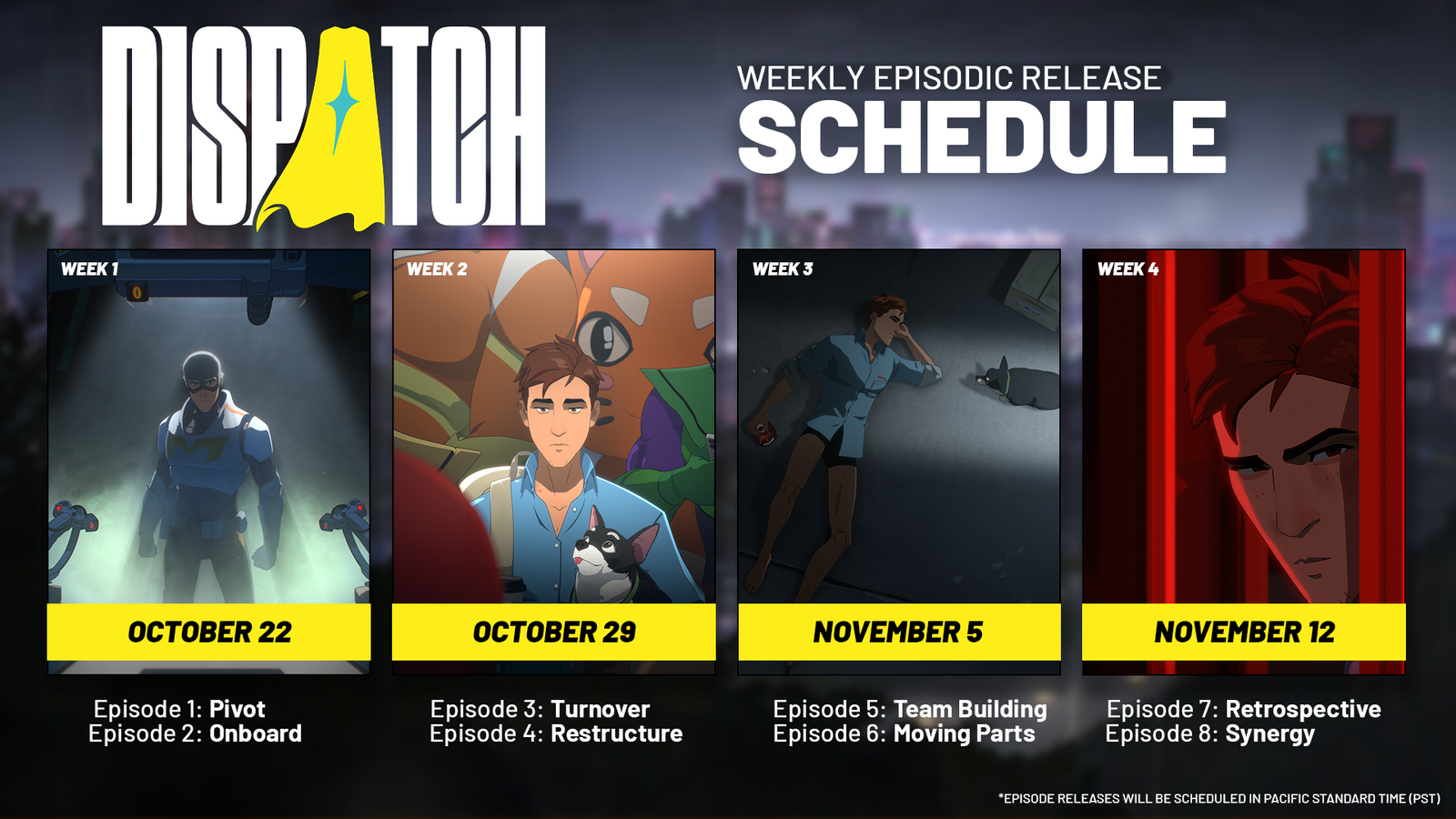
Here’s a full list of the episode releases for Dispatch — titles + release dates for all 8 episodes. Dispatch Wiki+2Game Rant+2
| Episode | Title | Release date |
|---|---|---|
| 1 | Pivot | October 22, 2025 Dispatch Wiki+1 |
| 2 | Onboard | October 22, 2025 Dispatch Wiki+1 |
| 3 | Turnover | October 29, 2025 Dispatch Wiki+1 |
| 4 | Restructure | October 29, 2025 Dispatch Wiki+1 |
| 5 | Team Building | November 5, 2025 Dispatch Game Hub+1 |
| 6 | Moving Parts | November 5, 2025 Dispatch Game Hub+1 |
| 7 | Retrospective | November 12, 2025 Dispatch Wiki+1 |
| 8 | Synergy | November 12, 2025 Game Rant+1 |